
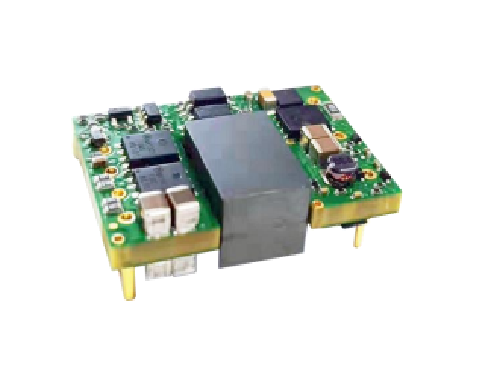
In today's rapidly evolving industrial landscape, the demand for efficient and reliable power conversion systems has surged significantly. A critical component in this domain is the AC to DC rectifier, a device essential for converting alternating current (AC) to direct current (DC), thereby enabling the operation of numerous industrial electronic devices. Recent technological strides have enhanced the performance, durability, and integration capabilities of these rectifiers, making them indispensable in various sectors including manufacturing, renewable energy, telecommunications, and automation.
### The Role of AC to DC Rectifiers in Modern Industry
AC to DC rectifiers serve as the backbone of power supply systems where DC voltage is required. They transform the AC power sourced from the grid into a stable DC voltage output suitable for powering electronic devices, circuitry, and control systems. This process is vital since many industrial components operate on DC voltage for optimal performance, safety, and energy efficiency.
Traditional rectifiers, however, often face challenges such as inefficiency, heat dissipation, electromagnetic interference, and size constraints. These limitations can affect the overall reliability and scalability of industrial power setups. Hence, ongoing research and development efforts focus on improving these aspects to meet higher standards of industrial applications.
### Innovations Driving Next-Generation Rectifiers
Recent innovations in semiconductor materials, circuit design, and thermal management have revolutionized AC to DC rectifiers. Enhanced semiconductor components such as silicon carbide (SiC) and gallium nitride (GaN) have been integrated into rectifier designs, offering superior switching speeds, lower power losses, and better thermal performance. This leads to higher energy efficiency, prolonged device lifespans, and more compact system footprints.
Moreover, advanced modular design techniques have enabled easier scalability and maintenance. Modern rectifiers now come with intelligent control systems for real-time monitoring, fault detection, and adaptive response—to safeguard against overvoltage, undervoltage, and thermal overloads. Such smart features are critical in industrial environments where downtime directly translates to production and financial losses.
### Applications Across Industries
The improved AC to DC rectifier technologies are pivotal in diverse industrial sectors. In renewable energy installations, such as solar photovoltaic systems and wind turbines, rectifiers convert the AC output from inverters into regulated DC power for battery storage or direct usage. Industrial automation and robotics also rely heavily on stable DC power supplied via efficient rectifiers for precise and uninterrupted operations.
Telecommunications infrastructure, data centers, and electric vehicle charging stations benefit from robust power conversion solutions that guarantee consistent supply and protection against power quality issues. The ongoing electrification and digital transformation trends predict continued growth in demand for sophisticated power conversion units.
### Technology Integration and Support from Leading Companies
Among companies driving this technological evolution is Shenzhen Skymatch Technology Co., LTD, a prominent player based in Bao’an, Shenzhen. Established in 2013, Shenzhen Skymatch specializes in research and development as well as the production of a wide range of industrial-grade TFT LCD (thin-film transistor liquid crystal display) modules, capacitive touch screen modules, and related driver boards. Their expertise in display and interface technologies complements the power conversion domain by enabling smarter, more interactive industrial equipment interfaces.
With a strong foundation in industrial-grade components, Shenzhen Skymatch is well-positioned to collaborate with power electronics manufacturers to develop integrated solutions that incorporate AC to DC rectifiers alongside advanced user interfaces for greater operational efficiency and ease of control. This collaboration could foster the creation of next-generation devices combining power conversion precision with intuitive display and touch capabilities.
### Future Outlook
The future of AC to DC rectifiers is set to be shaped by ongoing advancements in material sciences, digital control technologies, and system integration. The transition toward smart factories and Industry 4.0 requires power systems that are not only efficient but also interconnected and intelligent. Rectifiers equipped with IoT-enabled monitoring and AI-driven predictive maintenance features will become standard components in industrial power infrastructure.
Furthermore, as sustainability becomes a central industrial objective, energy-efficient rectifiers will significantly contribute to reducing carbon footprints and operational costs. Companies with robust R&D capabilities and a deep understanding of both power electronics and industrial interfaces, such as Shenzhen Skymatch Technology Co., LTD, are likely to play vital roles in this transformative journey.
### Conclusion
The advancements in AC to DC rectifier technology reflect the broader trend toward smarter, more efficient, and reliable industrial power systems. These improvements support vital sectors by ensuring optimal power conversion, enhancing operational stability, and enabling seamless integration with modern digital infrastructure. With specialized companies like Shenzhen Skymatch Technology driving innovation in complementary industrial components, the future promises more sophisticated, user-friendly, and sustainable power solutions tailored for the industrial era.
As industries continue to evolve, the synergy between power electronics and intelligent display modules will pave the way for next-generation industrial equipment designed for enhanced performance, control, and productivity. The impact of these technologies is poised to resonate across all facets of industrial automation and smart manufacturing, heralding a new era of efficient and sustainable power management.